
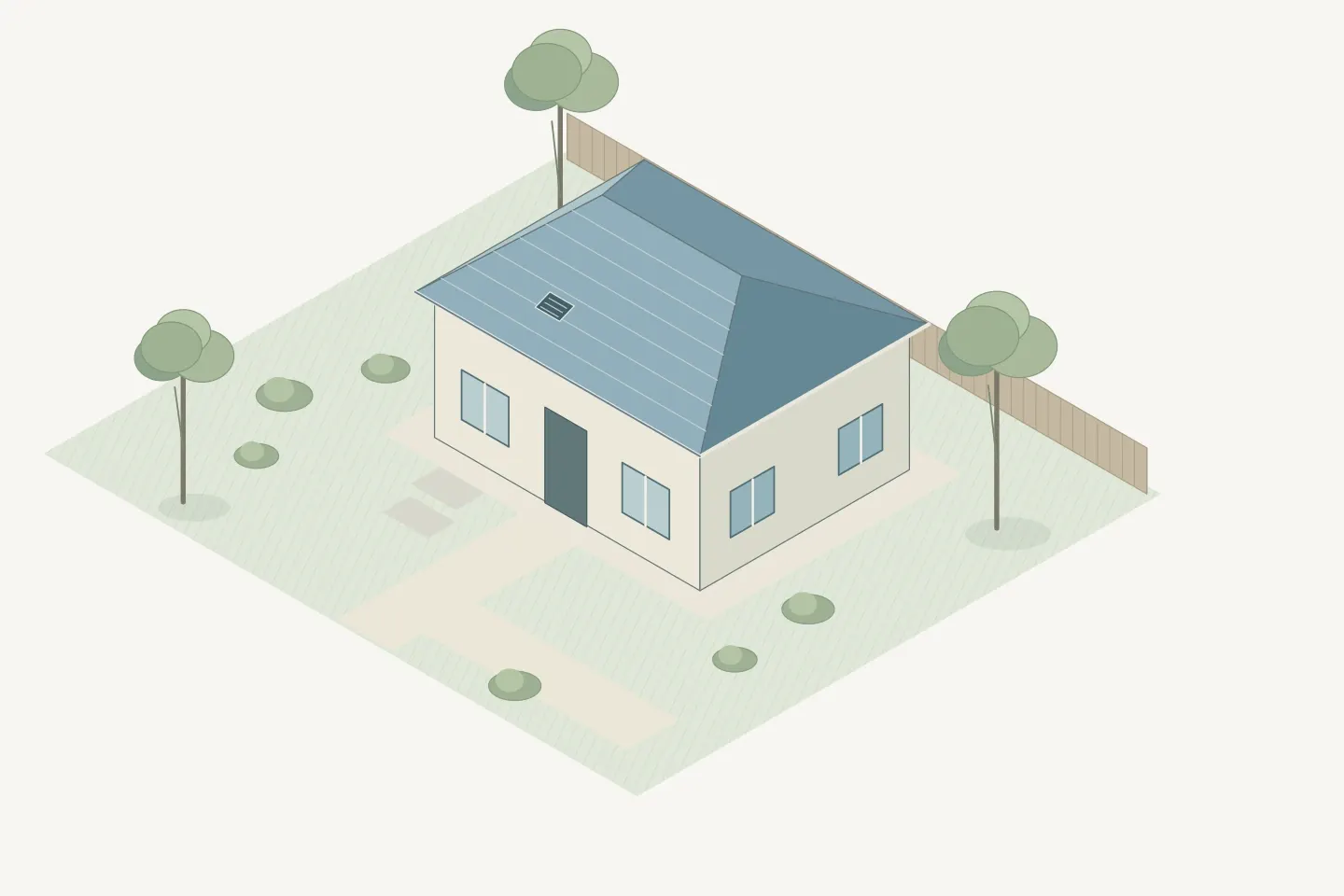
Plan work on the building and around it
Home hardening concerns the building's construction and exterior features. Defensible space concerns the surrounding fuels and vegetation. Planning both helps you see where a maintenance task ends and a construction question begins.
CAL FIRE's home hardening guidance and defensible space guidance are useful starting points. Confirm requirements with local fire and building officials, especially when changing building materials, landscaping or ventilation.
Home hardening: review the building
CAL FIRE's building guidance addresses roofs, vents, windows, eaves, walls, decks and garage openings. Start with an inventory of your existing construction, then discuss improvements with a qualified contractor.
- Which features can you maintain now?
- Which gaps, damage or construction details need professional assessment?
- Which improvements could be included in an already planned roof, window or siding project?
- Which changes require permits or a ventilation review?
Defensible space: review the surroundings
CAL FIRE's guidance starts at the house and works outward. It recommends reducing combustible material in the first five feet, including debris and combustible mulch. The appropriate wider plan depends on the site and applicable local requirements.
Walk the property and record where routine upkeep is needed, what stored material should be reviewed, and where an attachment connects to the home. Before moving anything, choose a location that also respects neighboring properties and access. A local assessment can help prioritize larger vegetation or landscaping work.
Look at the connections
Consider a deck beside a planted area or a fence joining the wall. Plan the upkeep around that feature and ask about the feature itself. NIST describes how nearby combustible features can spread fire toward buildings. Use our preparedness checklist to keep both parts of the review together.
Keep additional systems in perspective
An additional system should fit into the property plan. Ask what it addresses, what it depends on and how it will be maintained. Our wildfire defense comparison guide helps organize those questions.
PyroVeil is developing an exterior blanket intended to complement these measures. Its deployment and performance still need physical validation. Continue established preparation and maintain your household's evacuation plan.