
of U.S. homes estimated to face severe or extreme fire risk.
For investors
Developing an exterior wildfire defense layer for homes
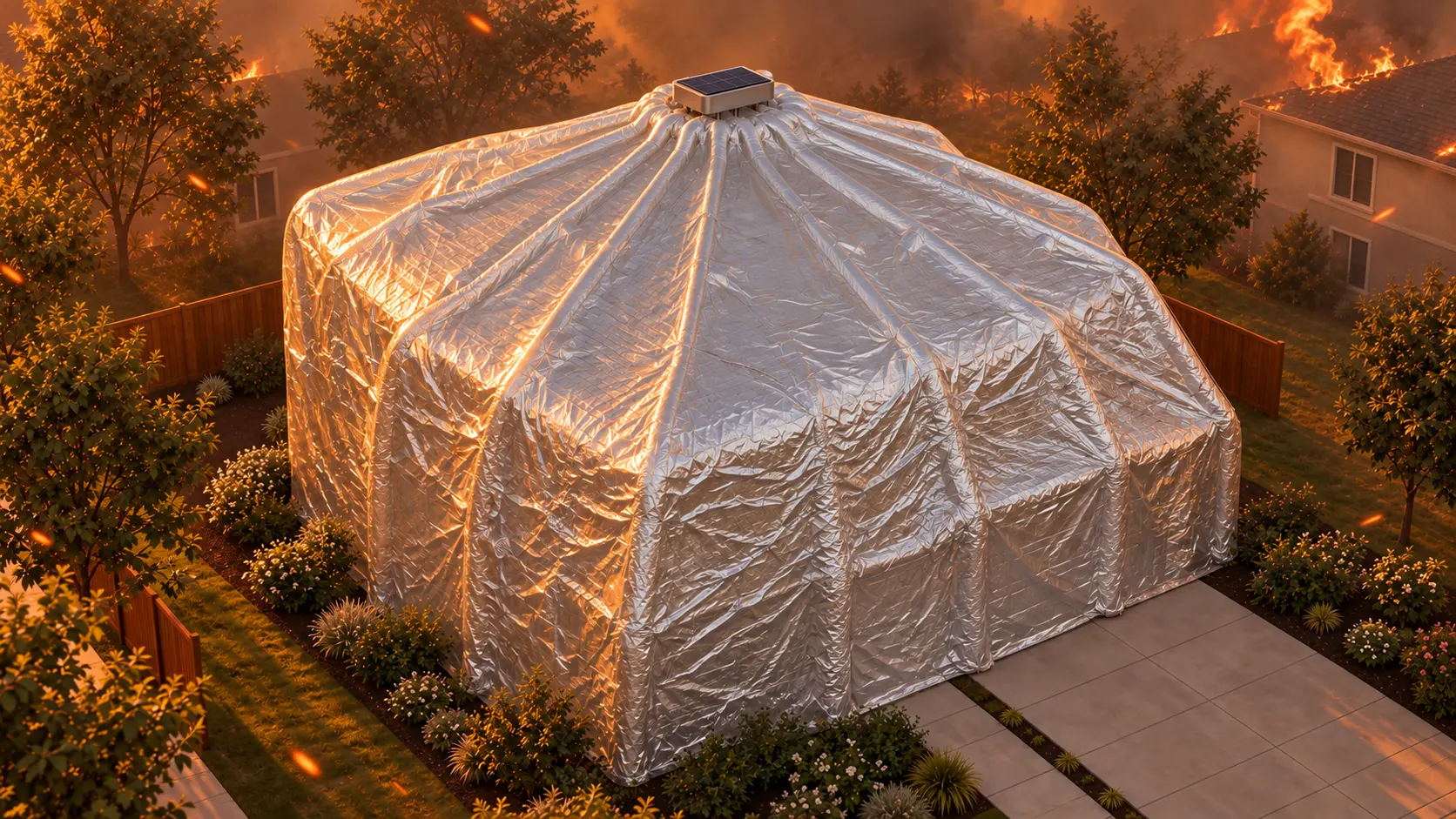
PyroVeil is developing a patent-pending system that combines rooftop storage, inflatable supports, and a deployable exterior blanket. The initial focus is U.S. homes exposed to wildfire, with work on deployment, testing, installation, and homeowner needs guiding development.
Start a ConversationCurrent stageProduct development
Initial marketU.S. residential
IP statusPatent pending
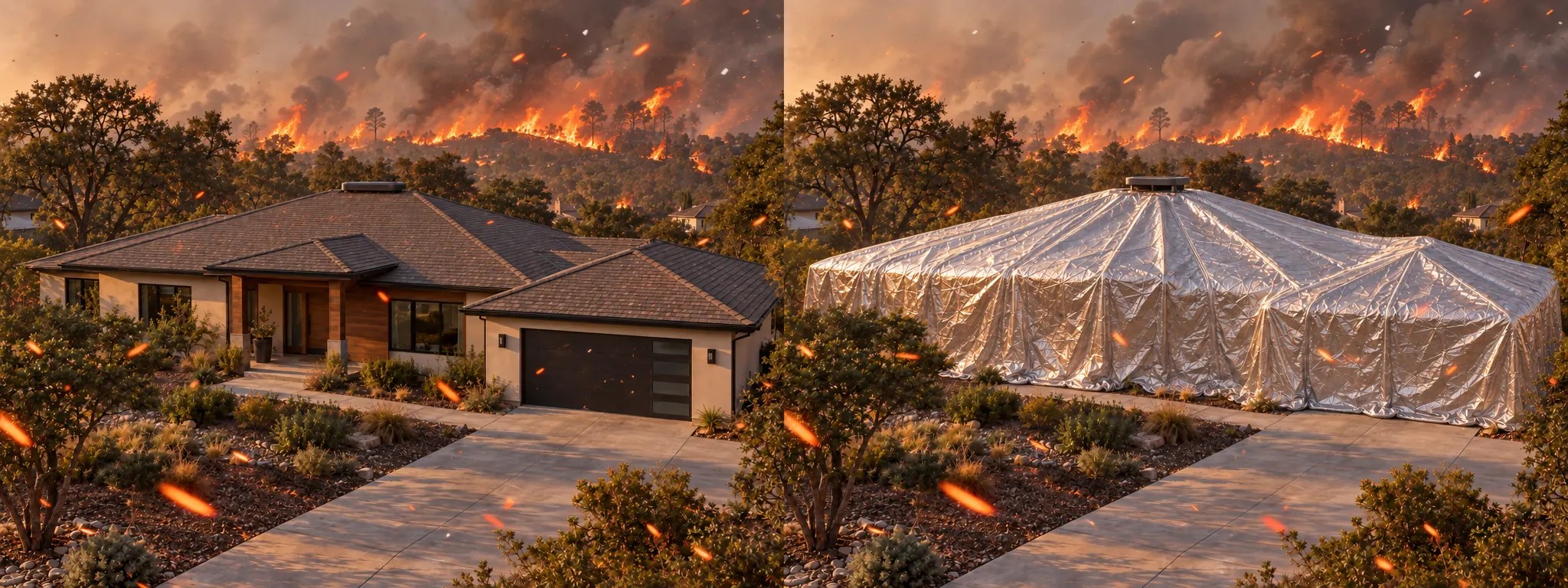
The proposed approach
Store the system before people evacuate
The concept keeps an exterior blanket stored on the home before an emergency. Inflatable supports are intended to deploy it without a water supply or someone fitting a wrap during the event.
PyroVeil is intended to complement home hardening and defensible space with exterior coverage after occupants evacuate. The proposed operation and performance require physical evaluation.
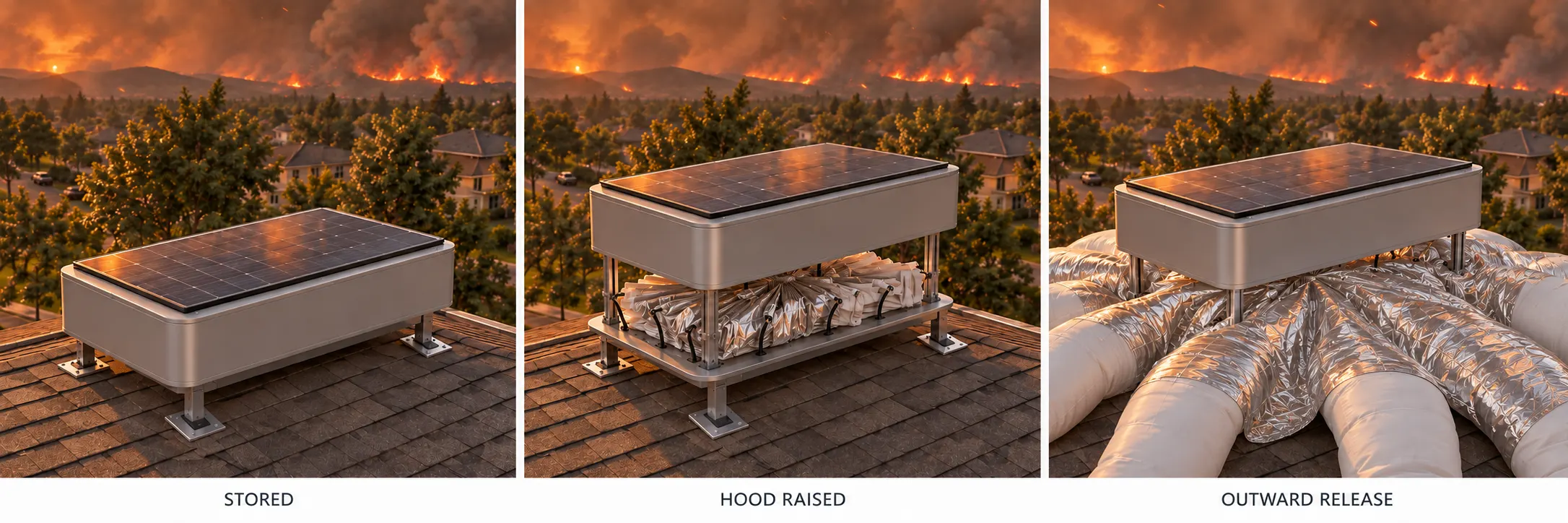
How the system deploys
A rooftop housing releases the blanket around the home
In the proposed sequence, the rooftop housing stays fixed while its hood lifts vertically. Inflatable supports then extend outward, carrying the blanket across and around the building.
Market context / 2025 U.S. estimates
Homes exposed to wildfire
The initial U.S. market
estimated value of those homes exposed to severe or extreme fire risk.
of those high-risk homes were estimated to be in California.
Source: Realtor.com, 2025 Housing and Climate Risk Report, published September 3, 2025. Property value at risk provides market context; product revenue will depend on eligibility, pricing, and adoption.
The initial customer is a U.S. homeowner facing wildfire exposure and interested in additional preparation. Regional pilot work could help us understand property requirements, installation needs, and opportunities to work with local communities and installers.
Commercial model
System sales, installation, and ongoing maintenance
Installed system
The proposed sale would include a system fitted to the property, professional installation, and commissioning.
Inspection and maintenance
Inspection, component replacement, readiness records, and reset after deployment are proposed parts of an ongoing service program.
Installation partners
Qualified installers, builders, and community programs could help support regional installations as the product develops.
Development plan
Development and testing milestones
The proposed work covers deployment mechanics, different building shapes, controlled exposure, installation, and supervised pilots.
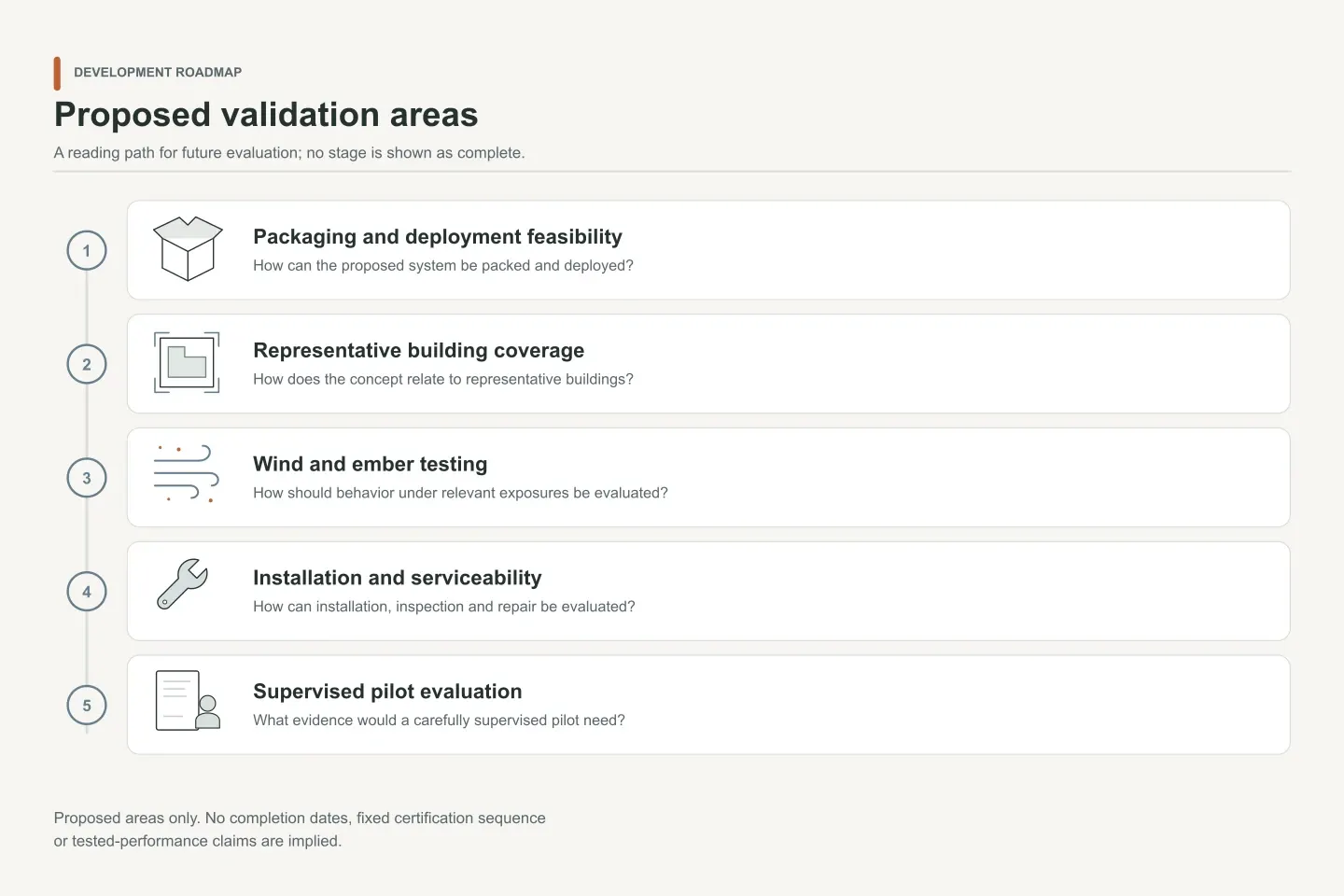
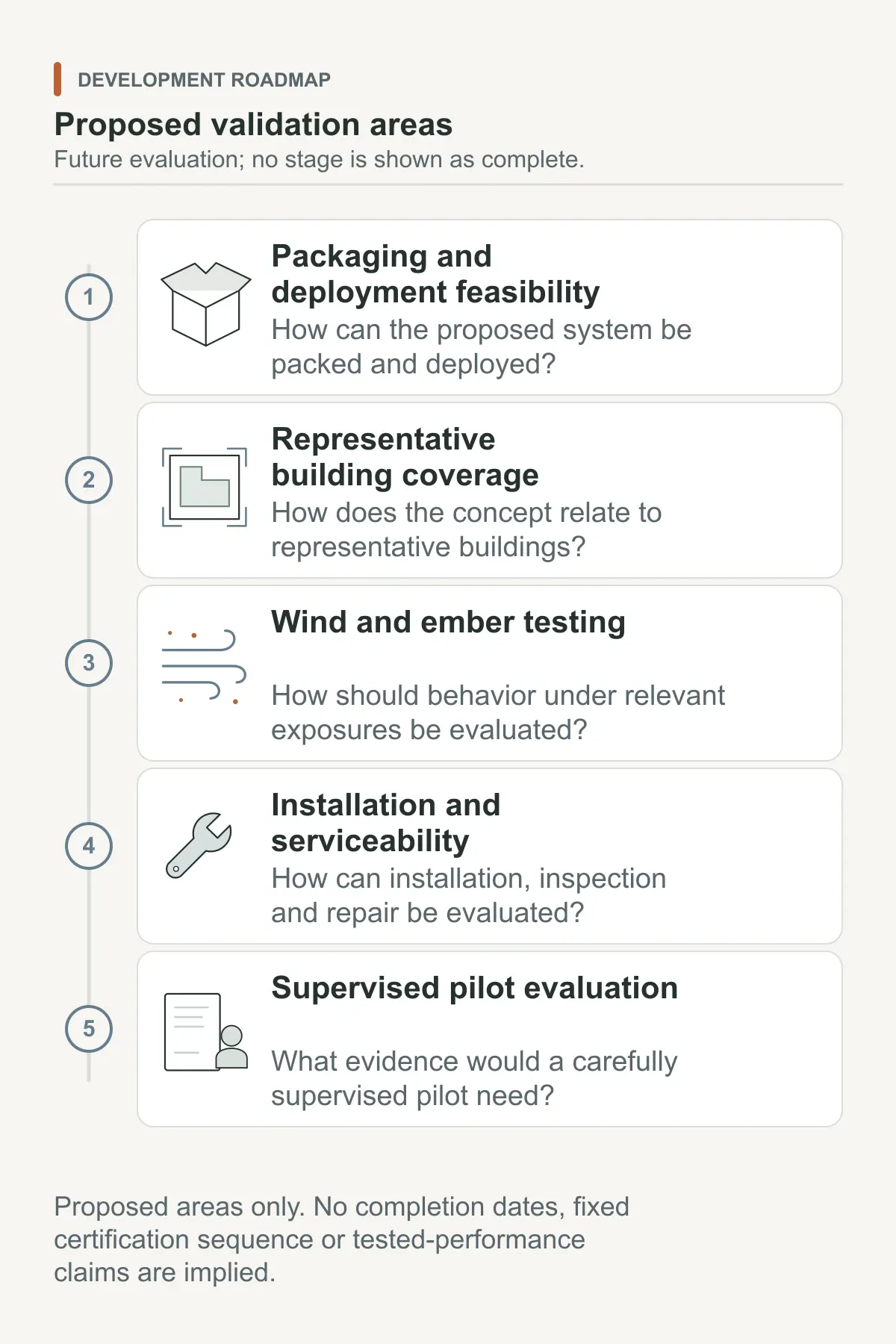
Package and deploy
Establish cassette capacity, folded membrane release, inflation control, and repeatable deployment without external rigging.
Cover different building shapes
Evaluate roof clearance, surrounding ground, attachments, and perimeter coverage around different homes.
Test wind and ember exposure
Measure stability, material behavior, seams, and coverage under controlled exposure. Define limitations from results.
Evaluate installation and maintenance
Evaluate roof loads, weather exposure, inspection, reset, maintenance, and safe operating procedures.
Evaluate supervised pilots
Only after appropriate safety review, assess real-property installation and operation with a defined test protocol.
Building a repeatable product
The system needs installation, testing, and service as well as hardware
Development must address how the system fits different properties, how it is installed, how its condition is checked, and how components are maintained or replaced. Learning from these areas can inform both the hardware and the proposed service model.
PyroVeil is in product development and is not commercially available yet. Prototyping, physical testing, installation costs, and homeowner research are central to the work ahead.
See how the proposed system worksStart a Conversation
Discuss investment or strategic partnership
Tell us about your investment focus, operating experience, or strategic interest in wildfire resilience.