Store at the roof apex
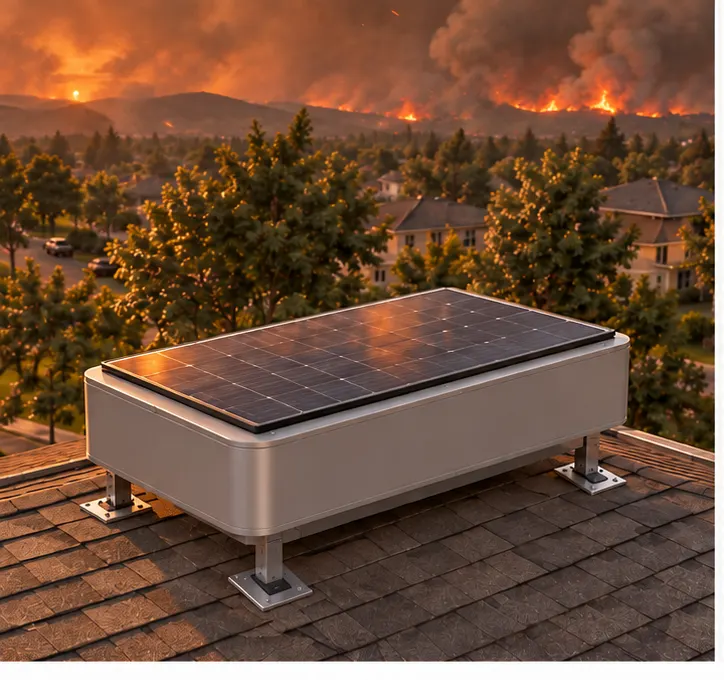
The housing is designed to contain the folded blanket, inflatable supports, activation hardware, and serviceable controls in one installed package.
 Request access
 The system
The proposed system stores a folded silver blanket in a compact rooftop housing, or cassette. Inflatable supports are intended to extend outward and down around the home, carrying the blanket over its exterior. The system is in development.
See if my home qualifies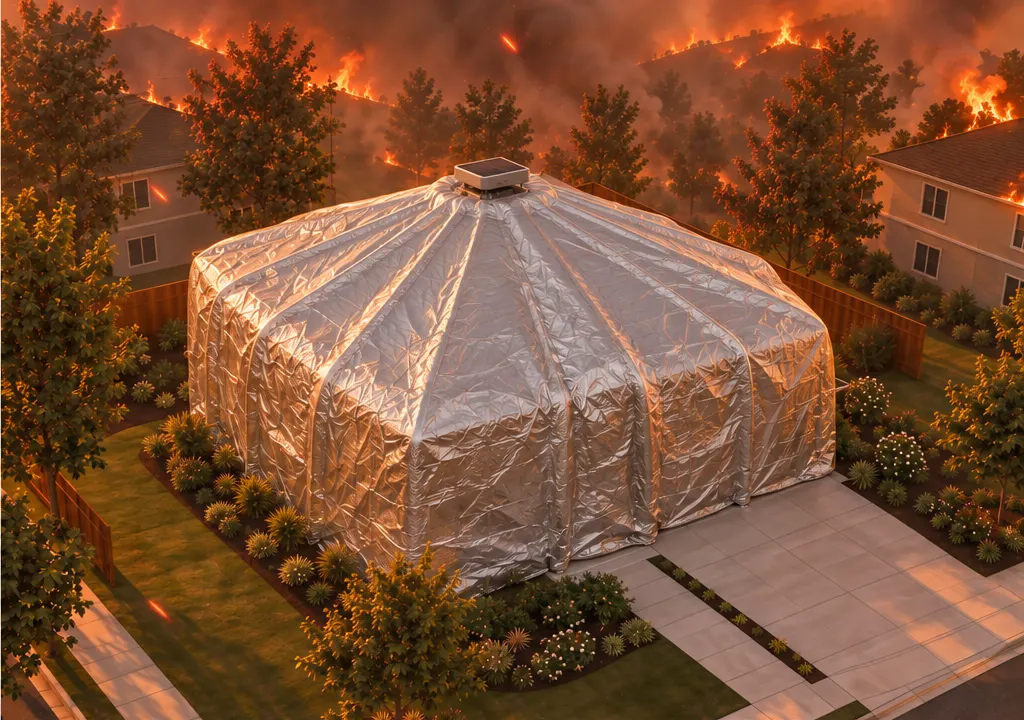
Deployment sequence
The concept draws on the compact packing and inflation of aircraft emergency slides. PyroVeil adapts that approach for outward deployment from a fixed rooftop housing; the proposed mechanism still requires physical testing.
 01
01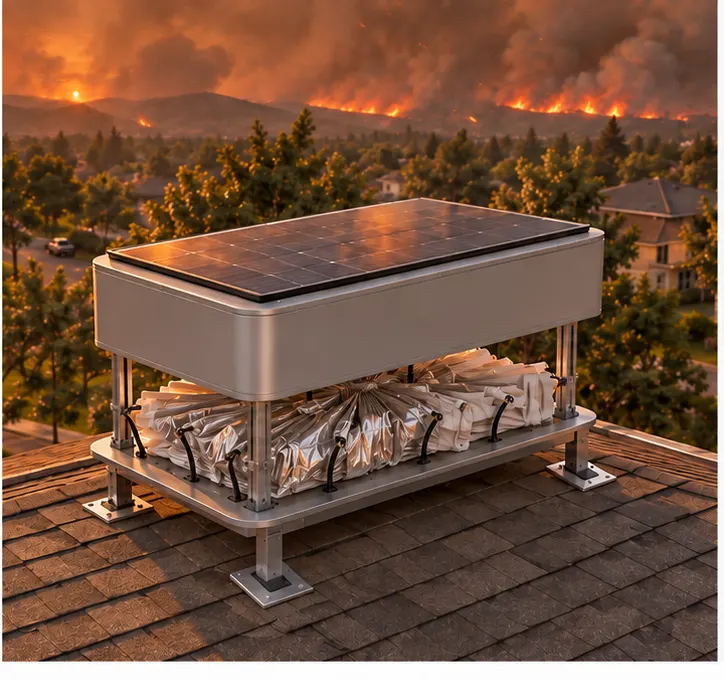 02
02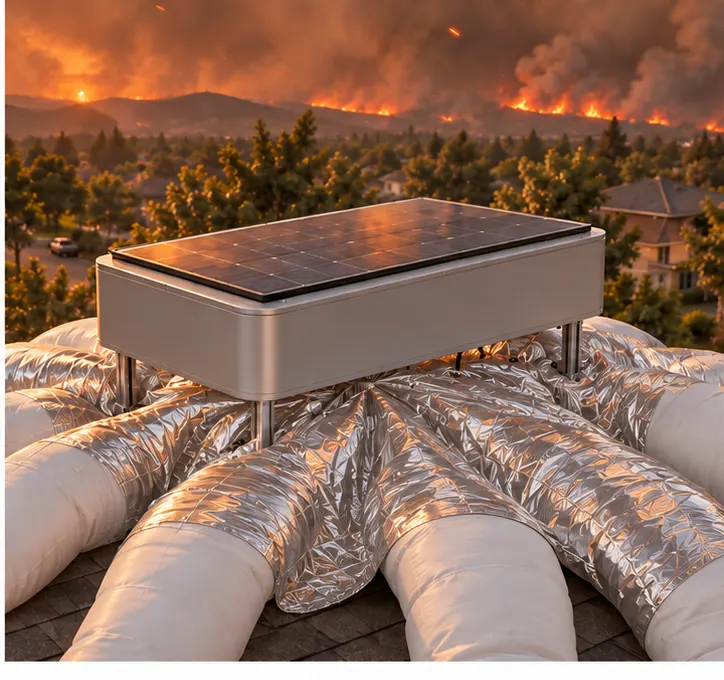 03
03From storage to coverage
The housing is designed to contain the folded blanket, inflatable supports, activation hardware, and serviceable controls in one installed package.
In the proposed sequence, the hood opens and the supports inflate. They carry the blanket outward from the fixed housing, with gravity assisting its descent around the building.
Deployment is intended to operate without ropes, cables, hoses, a water supply, or external rigging.
The opaque silver blanket is intended to span roof features and descend to ground level around the home, covering the roof, walls, doors, windows, garage openings, and vents.
The supports, fabric tension, gravity, building shape, and surrounding ground all affect how the blanket would hang.
Installation
Roof loads, chimneys, solar equipment, roof shape, and clearances must be considered when placing the housing and planning deployment.
Attached structures, slopes, landscaping, and access affect the coverage area around the home.
Activation, power, weather exposure, inspection, maintenance, and reset after deployment are part of the development work.
Development and testing
Development focuses on packaging the system, repeatable deployment, coverage across different building shapes, wind and ember testing, installation, and maintenance. These areas require physical evaluation as the work progresses.
Patent pending. PyroVeil is not commercially available yet and is intended to complement home hardening, defensible space, and timely evacuation.
See the development milestones