
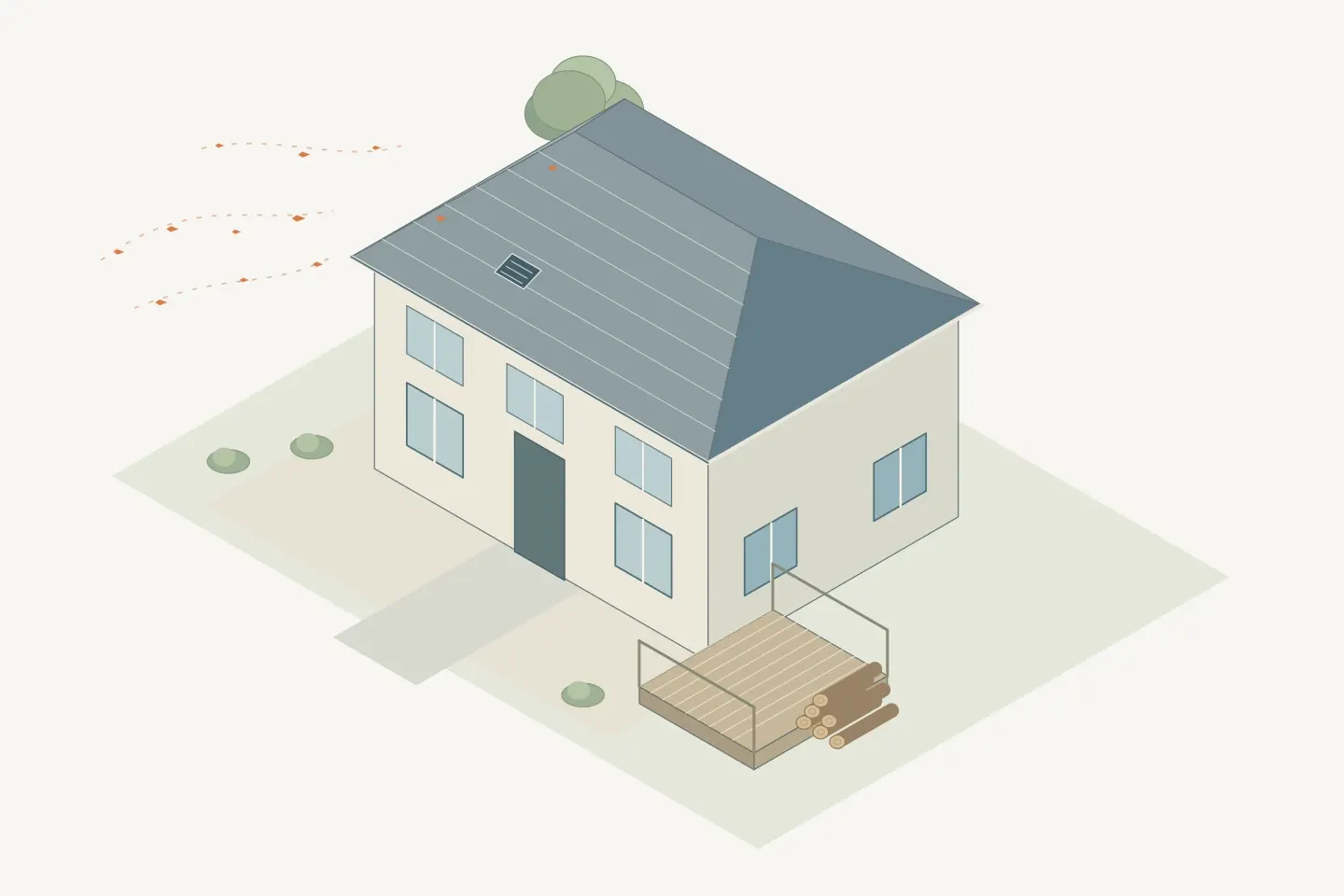
How embers reach a home
Burning vegetation and structures can release small pieces of hot or burning material. Wind carries these embers ahead of the main fire, where they can start new fires. NIST explains how flames and embers spread through communities. Distance from visible flames is only part of the picture when preparing a home.
A useful property review follows the route from an ember landing to material it could ignite. Look at the house, its attachments, and nearby combustible items together. NIST's structure hardening guidance calls for addressing the vulnerabilities of each building rather than relying on one improvement.
Three places to examine
Debris on exterior surfaces
Leaves and needles on a roof or in gutters are a maintenance concern in CAL FIRE's home hardening guidance. Arrange cleaning safely before an emergency. During a ground level walk, note areas that need a closer look from a qualified professional.
Openings into the building
Vents deserve attention because embers can enter a building through them. NIST describes this ignition route. Identify the vent locations on your home and ask a contractor about suitable ember resistant options and ventilation requirements.
Combustible material near the house
NIST has studied how nearby fences, landscaping and sheds can ignite and spread fire toward a building. Read the research overview. For your own review, record where stored items or attachments meet the house and discuss priorities with your local fire service.
Turn the review into a practical next step
Photograph an area from a safe position, write down the question it raises, and choose who can resolve it. For example: “Does this attic vent need replacement?” or “Who will clear the gutter above the garage?” Our wildfire home preparedness checklist helps organize these observations.
Prepare the household too
Sign up for local alerts and practice your evacuation plan before a wildfire. When told to evacuate, leave promptly; leave earlier if you feel unsafe. The U.S. Fire Administration explains how to prepare and evacuate.
PyroVeil is developing a roof mounted exterior blanket concept to complement preparation around the home. Deployment, coverage and performance require further engineering and physical testing. Learn what that work involves in our development and testing roadmap.